

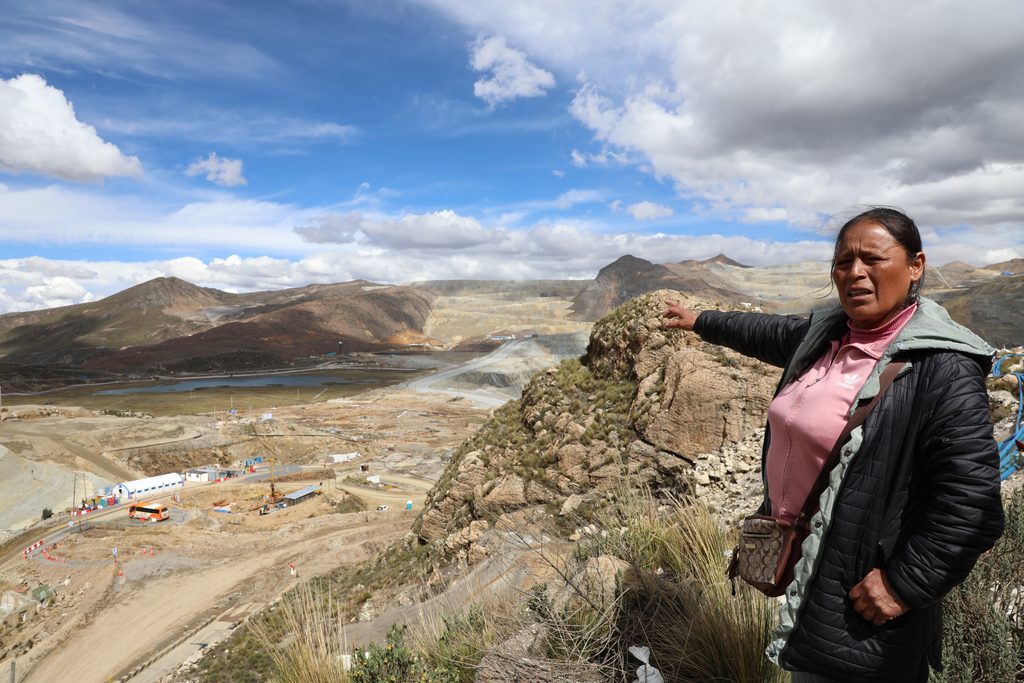
Nearly 20 years ago, one of the Chinese government’s largest mining companies set up operations in Peru’s central Andes with one goal: to extract more than one billion tons of copper, a mineral crucial to China’s growth. The mining project, however, meant that thousands of people would have to leave their centuries-old hometown and move to a new city. Thus began the story of a group of families who decided not to abandon their homes in Old Morococha. A report produced with the support of Red Muqui and Pastoral Social Dignidad Humana (PASSDIH).
By Yoselin Alfaro, with support from Brandon Quevedo and Leslie Moreno
At nearly 5,000 meters above sea level, standing between the Central Highway and a sheer drop, Elvis Atachagua and Yolit Alejo look at the remains of what was once an earthen bull. Until 14 years ago, from where the two are standing, it was possible to make out the head, back and limbs of a hornless bull in the silhouette of the mountain. That is why the mountain was named Toromocho: mocho means blunt, pointed-off or cut short in Spanish. In 2012, however, the earthen bull was sacrificed.
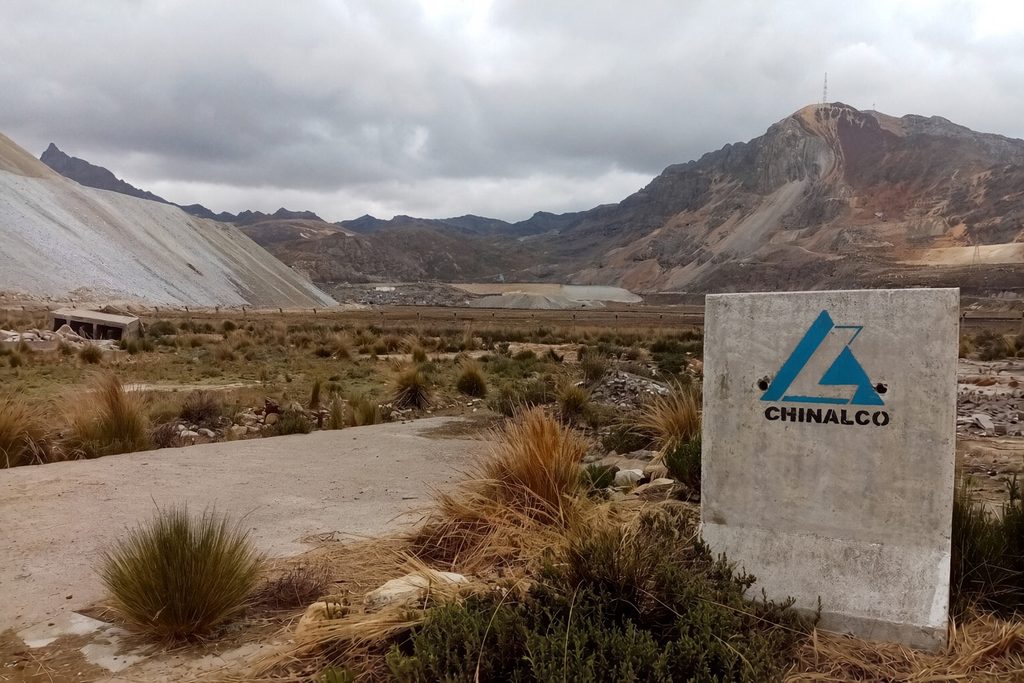
Today, where there was once a mountain, a two-kilometer-long open-pit mine stretches across the landscape. That is why, from the edge of the highway, all Yolit and Elvis can do is remember where their homes once stood. They and another 5,000 residents lived in Morococha, a town at the foot of the mountain. Today, however, the area is occupied by a Chinese state-owned company that, through a subsidiary, is seeking to extract more than one billion tons of copper and other minerals.
A team from La Encerrona visited Old Morococha, a five-hour drive from Lima, Peru’s capital, and spoke with the protagonists of this story. This is a portrait of one of Peru’s longest-running mining-related social conflicts: the one pitting a Chinese giant against a group of families who have resisted in the central Andes over a copper project involving a metal that is crucial to the national economy.
THE CHINESE GIANT IN THE ANDES
“It was a very difficult moment. Bringing that up is very sensitive; it means going back and remembering,” Yolit says of the day she was evicted. Originally from Huánuco, she arrived in Morococha in 1995, when she was 10 years old. Her family migrated there because of the mining activity in the surrounding area: her father worked for two mining companies, while her mother worked in commerce. In Morococha, Yolit grew up and started a family of her own. Today, she is the mother of four.
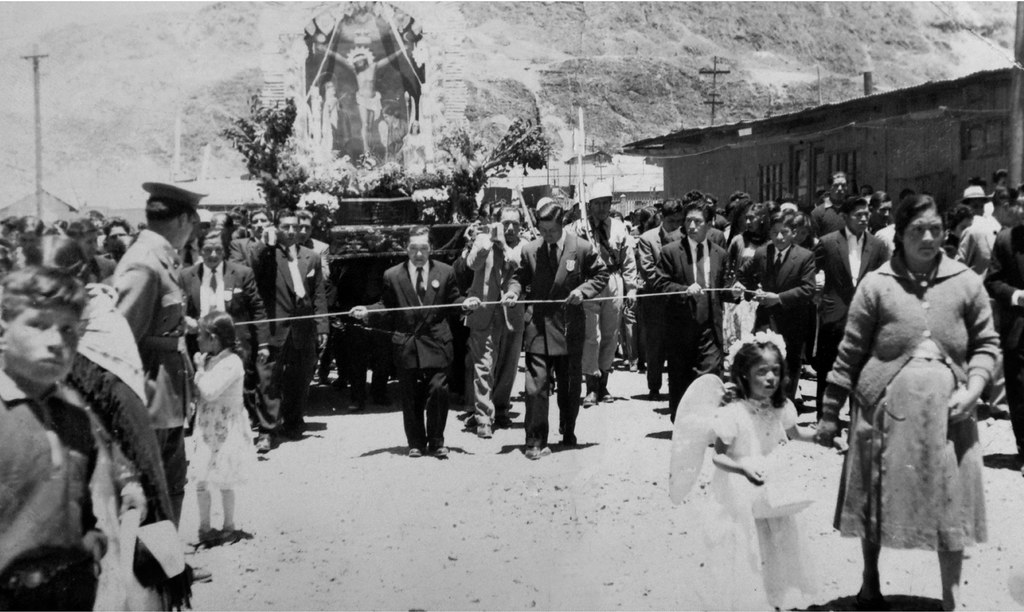
Yolit’s story is representative of this town. Founded at the beginning of the 20th century, Morococha grew out of migration driven by mining activity and eventually became home to 5,000 people who worked not only in mining, but also in commerce and livestock farming. The processions that filled the central square, the weddings that made their way through the streets and the carnival celebrations that marked Morococha’s century-old history were documented by Peruvian photographers such as Sebastián Rodríguez.
Until 2007, when everything changed.
That year, the Peruvian government transferred the mining concessions for the Toromocho project to an Asian giant: Aluminum Corporation of China, better known as Chinalco. Operating in more than 20 countries, the company is directly overseen by the Chinese government and ranks among the world’s 500 highest-revenue companies. So far this year alone, its Peruvian subsidiary has recorded more than $1.8 billion in exports.
“Many people say the mining company lifted us out of extreme poverty, but I don’t see it that way. Old Morococha had economic activity; there was a large population,” Yolit says.
Chinalco’s interest in Morococha’s copper is part of a larger trend: China is the main destination for Peruvian copper. Between January and March of this year alone, more than 73% of the copper produced in Peru ended up in China. The Asian giant needs the metal for its energy transition, explains economist Julia Cuadros of CooperAcción.
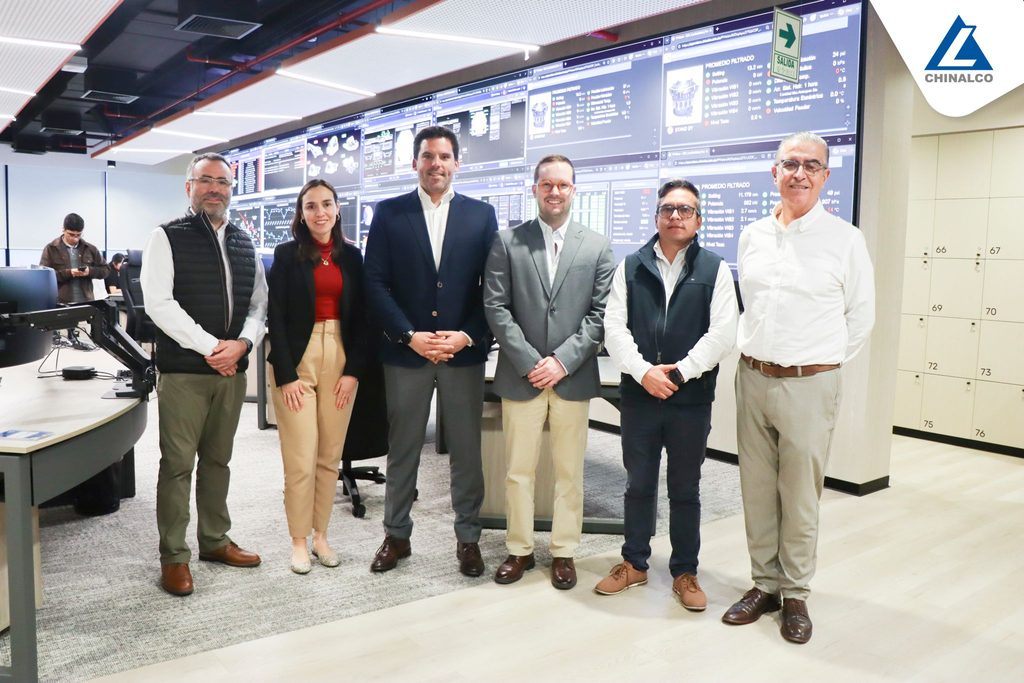
Chinalco’s presence in Peru is not limited to the economy; it extends into politics as well. In 2008, the company’s executives met with then-President Alan García at a luxury hotel in Singapore. García’s government had transferred the mining project to Chinalco the previous year. Between 2023 and 2025, Chinalco headed the Association of Chinese Companies in Peru. And just two months ago, its Peruvian subsidiary received a visit from two former right-wing congress members, Alejandro Cavero and Adriana Tudela.
To make way for the extraction of the mineral beneath Morococha, the Peruvian government and Chinalco promoted the relocation of its residents to a new city built 10 kilometers away, in Carhuacoto, with funding from the mining company. In videos produced by the company, Chinalco argued that the new city would have modern, orderly infrastructure and improve residents’ quality of life. The resettlement process began in 2012.
That was when the resistance began.
THE RESISTANCE OF MOROCOCHA
Elvis was born in Morococha. His father migrated to the town at the age of 16 and from then on worked for Sociedad Minera Puquiococha, a Peruvian company that operated there. Elvis remembers the weekend fairs, where clothes and household appliances were sold, while he rode through the streets on a tricycle selling oranges to earn some extra money. His customers were workers from the nearby mines.
That sense of identity explains why Elvis opposed the resettlement in 2012. In November of that year, around 300 Morococha residents, including Elvis and Yolit and led by the Defense Front, blocked the Central Highway in protest against the relocation. In its reports at the time, Peru’s Ombudsman’s Office recorded a total of five civilians and one police officer injured during the crackdown on the protest by security forces. The resistance had begun.
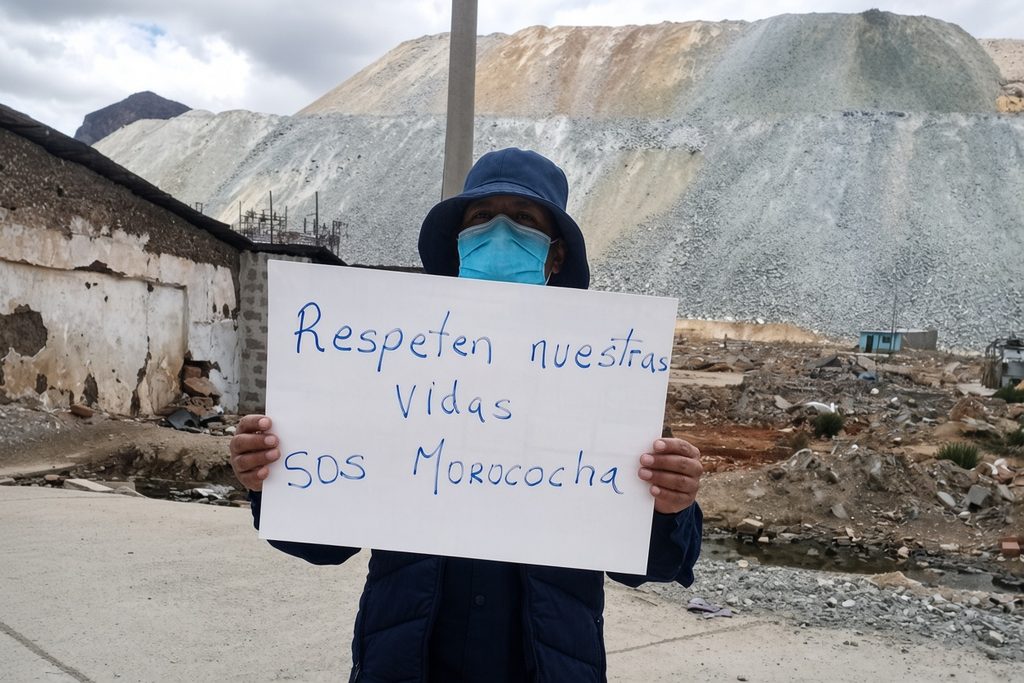
A potential solution to the social conflict emerged in Morococha itself. In 2013, civil society groups and the local municipality drafted the Unified Framework Agreement (Convenio Marco Unificado, or CMU). The document set out a series of commitments that Chinalco would have to undertake if it wanted to resettle the population. Among other things, it called for the company’s camps to be located within the new city in order to boost the local economy, financial compensation for the relocation, and access to stable jobs for local residents.
The agreement was especially important because it was drawn up by civil society itself and therefore reflected Morococha residents’ actual needs, says engineer Edwin Alejandro Berrospi, an environmental specialist with Red Muqui. “The framework agreement is the commitment a company makes to society (…) and ideally it should be signed before a project is implemented,” Berrospi added.
But the Peruvian government had other plans. Two legal measures were approved to push the resettlement forward. The first was issued by President Ollanta Humala, who had come to office with a critical stance toward the extractive model. In August 2013, Humala declared Morococha an emergency zone because of the high risk of rockslides and ground subsidence in some areas. Using this argument, Humala ordered the “immediate temporary relocation of the population.”
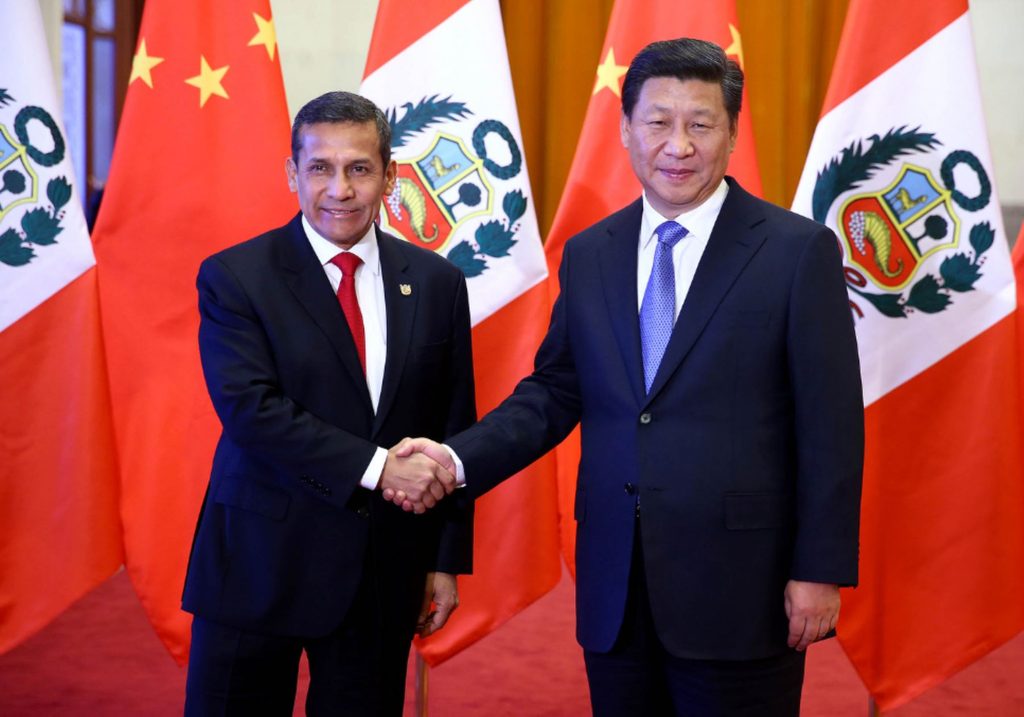
The second measure was issued by Congress. Originally, under a 1907 law, Morococha had been granted district status more than a century ago. In the middle of the conflict, however, in September 2013, Congress amended the law to move the district capital to the new city built by Chinalco, which had received the approval of Humala Tasso.
Thus, in December of that same year, backed by these two legal measures and without having signed the agreement proposed by Morococha, Chinalco officially began operations.
“This project will help improve our economy and the economy of ordinary people; Peru is consolidating its position as a mining power,” President Humala said during the inauguration ceremony. Meanwhile, outside the mining unit’s facilities, residents held a sit-in protest.
THE LAST MOROCOCHANS
Yolit remembers her home in Old Morococha as a place where she felt free, calm and at peace. “It didn’t matter where I went: I knew that when I came back home, I could sleep peacefully,” she says. In her house, she recalls, she could cook over a wood fire, keep pets, go out into the streets to play volleyball or soccer, attend the fairs, talk with her neighbors and share lunch with them. Today, she says, those things seem almost impossible to bring back into her life.
Her voice breaks as she remembers Old Morococha. Before the mining company arrived, Yolit says, she experienced moments of unity and fraternity with her neighbors. On holidays and weekends, for example, they would gather to prepare pachamanca, a traditional Andean dish cooked underground using hot stones. “Before Chinalco arrived in Morococha, there was no division (…) we were all residents and we lived peacefully,” she recalls.
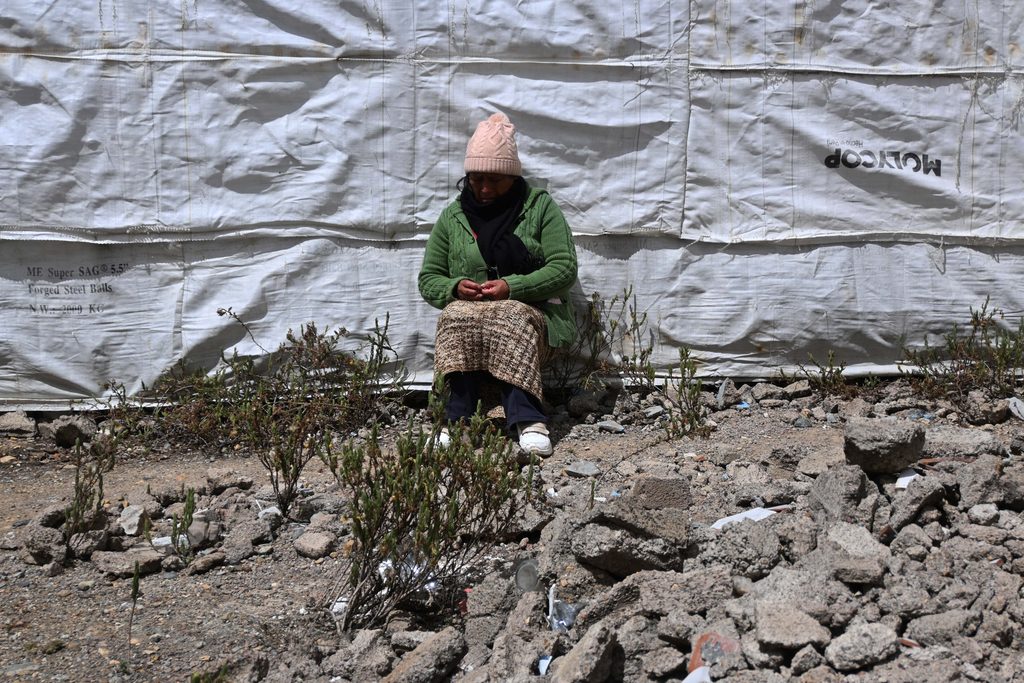
That is why, despite the start of Chinalco’s operations, Yolit and other residents decided to remain in Morococha. Between 2013 and 2018, however, a series of regulations made it increasingly difficult to stay in their homes. First, Morococha was declared a “non-mitigable risk zone,” a designation that led to the withdrawal of public institutions such as schools, the local health clinic and the police station. Then, living in such areas was prohibited and residents’ certificates of possession were rendered invalid.
Little by little, most of the population left Morococha. Except for a group of families, including Yolit and Elvis. Their homes were located within the last 34 hectares of the town that Chinalco had been unable to take possession of. In fact, in May 2018, Morococha representatives traveled to the headquarters of the Ministry of Energy and Mines in Lima to ask that these lands not be expropriated, as the mining company wanted them to expand its project.
The request had no effect.
That same year, the National Superintendency of State Property officially expropriated the 34 hectares so they could be used to expand the Toromocho mining project. The measure coincided with the 10th anniversary of Chinalco’s presence in Peru. In June 2018, the mining company confirmed the expansion of its project at an event attended by then-President Martín Vizcarra and China’s ambassador to Peru, Jia Guide.
By 2019, only about 15 people remained in Morococha, including Elvis and Yolit and her family. Feeling afraid was inevitable, Yolit says, but they held on to the hope that their resistance and pursuit of justice would serve as an example, so that the displacement of an entire town would not happen again for economic interests.
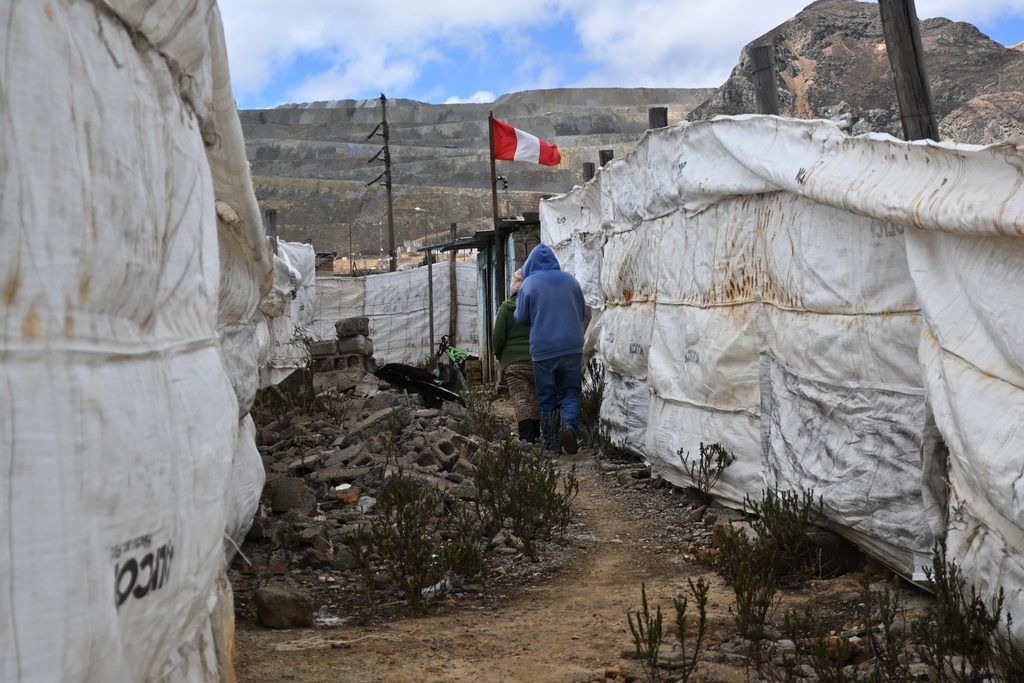
“What we did was look after one another and stay alert,” Yolit explains. “For example, I kept an eye on Elvis, making sure nothing happened to him, and he kept an eye on me too,” she adds. For Yolit, the mining company’s insistence on evicting them only brought them closer together. For years, the last families resisted in a destroyed town, surrounded by two-meter-high sacks that the company had used to isolate their homes from the mining project.
Their situation worsened when electricity was cut off in 2019, along with harassment by mining company security personnel and the Police, an institution that, according to the Chinese Human Rights and Environment Financing and Investment Collective (CICDHA), has maintained an agreement with Chinalco to this day. In its report, CICDHA accuses Chinalco of violating territorial, labor, civic and political rights, as well as harming the environment in Morococha. We contacted Chinalco to ask about these allegations, but received no response.
Despite everything, these families resisted in their hometown of Morococha for another seven years. Until June 2025, when a Civil Court in La Oroya upheld an eviction request filed by Chinalco. A date was set: September 19 of that same year.
EVICTION AND IRREGULARITIES
On the morning of September 19, the last Morococha residents barricaded themselves inside their homes. Only five families remained. The night before, access to their houses had been blocked by mounds of earth. Elvis raised two flags: a white flag and a Peruvian flag, hoping to reach a truce. Shortly after 9:30 a.m., around 200 police officers entered the area. The press and human rights organizations were prevented from observing the operation from close range.
Even so, the eviction could be seen from the highway. In addition to the Police, a group of 60 people wearing blue coveralls removed the belongings of the last residents and loaded them onto moving trucks. The vehicles had their license plates covered. To this day, these belongings remain in Chinalco’s custody and have not been returned to their owners.
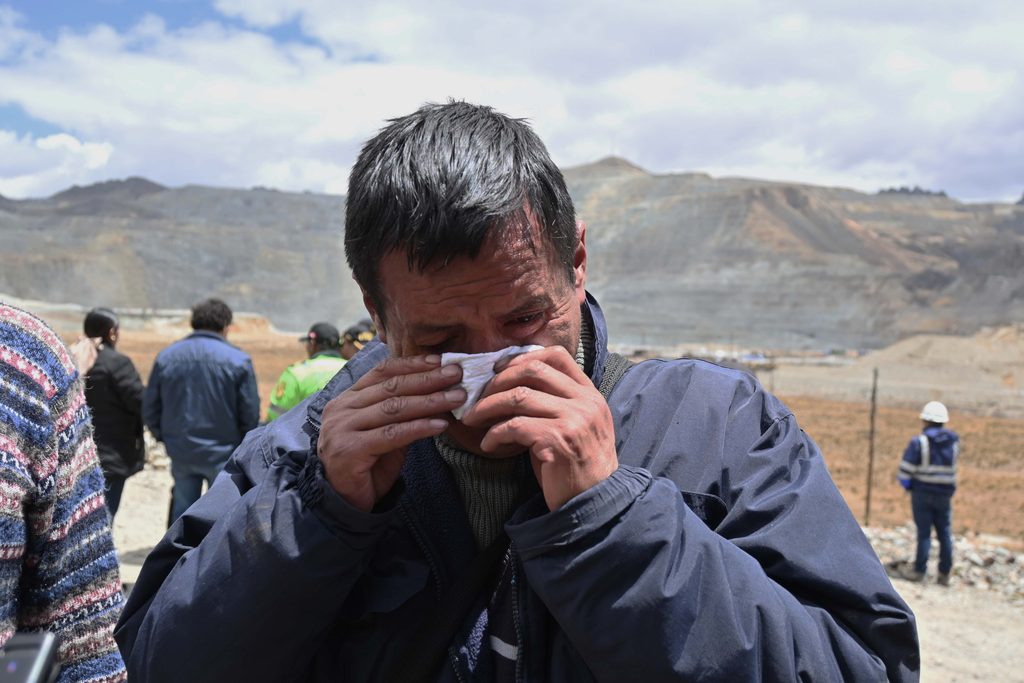
The last Morococha residents did not resist. The first house to be evicted was that of Dennis Huerta. Elvis Atachagua’s home was next. Afterwards, Elvis walked for the last time along the road leading to the old town. His face distraught, trembling and with his hands in his pockets, he spoke to the press, unable to hold back his tears.
But they were not merely evicted: their homes disappeared.
That evening, September 19, Elvis Atachagua reported that the houses had begun to be demolished. “Mrs. Mari is in bad shape; all the houses have been demolished,” he wrote on WhatsApp. The following day, September 20, there was no trace of the homes in Old Morococha.
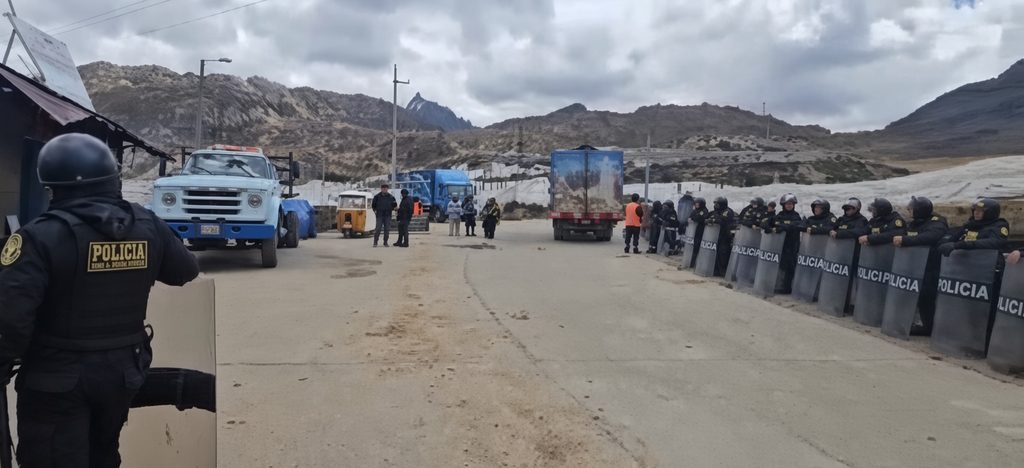
The families’ lawyer, Carlos Castro, says the operation was irregular. Although Morococha had been declared a non-mitigable risk zone, the same regulation that granted it that designation prohibited judicial actions in the area. For this reason, in December of last year, the Junín prosecutor’s office opened an investigation into Judge Jesús Santana, who had ordered the eviction, for the alleged crime of judicial misconduct.
At first instance, the prosecutor’s office closed the case against the judge, although the families’ defense team has filed a motion for reconsideration.
The prosecutor’s investigation, however, prompted a response from Judge Santana himself. In May of this year, the judge requested that Chinalco be investigated instead: Santana says his ruling had not authorized the demolition of the houses. The complaint, alleging disobedience of authority, extends to lawyers and employees of the Chinese mining company.
SILENCE AND DANGER IN NEW MOROCOCHA
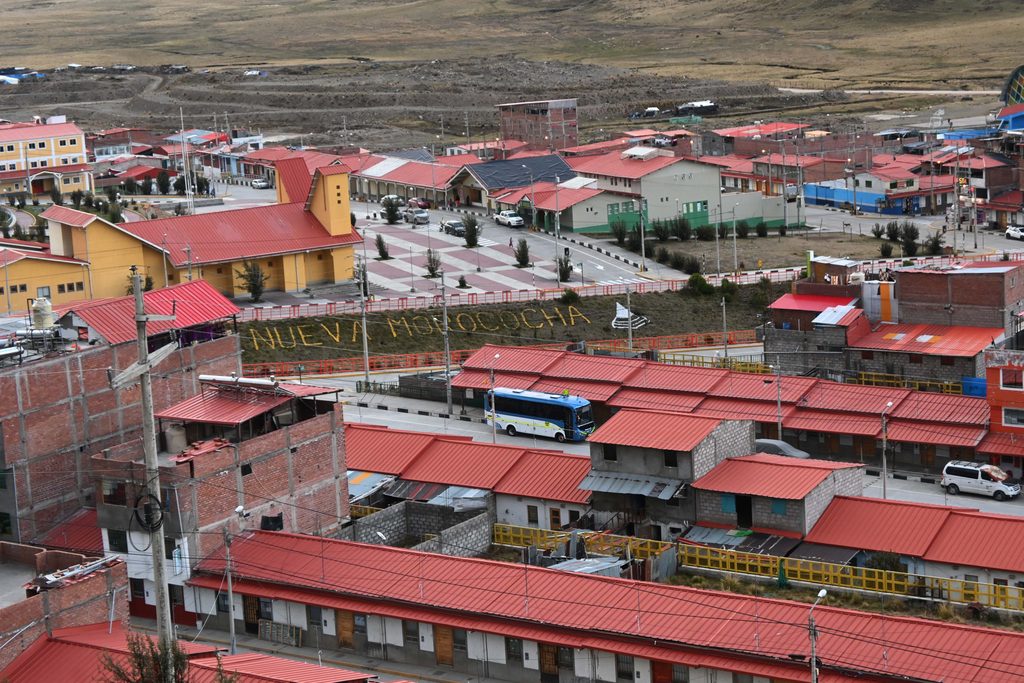
Life in the city known as New Morococha is peculiar: few people walk its streets during the day. Others appear at the doors of their homes but immediately disappear when they see outsiders. Pflucker and La Codiciada avenues have been taken over by pets taking advantage of the sunlight. The cold wind at 4,200 meters above sea level sweeps through the schools, police station, lodging houses and restaurants, which appear to be almost permanently empty.
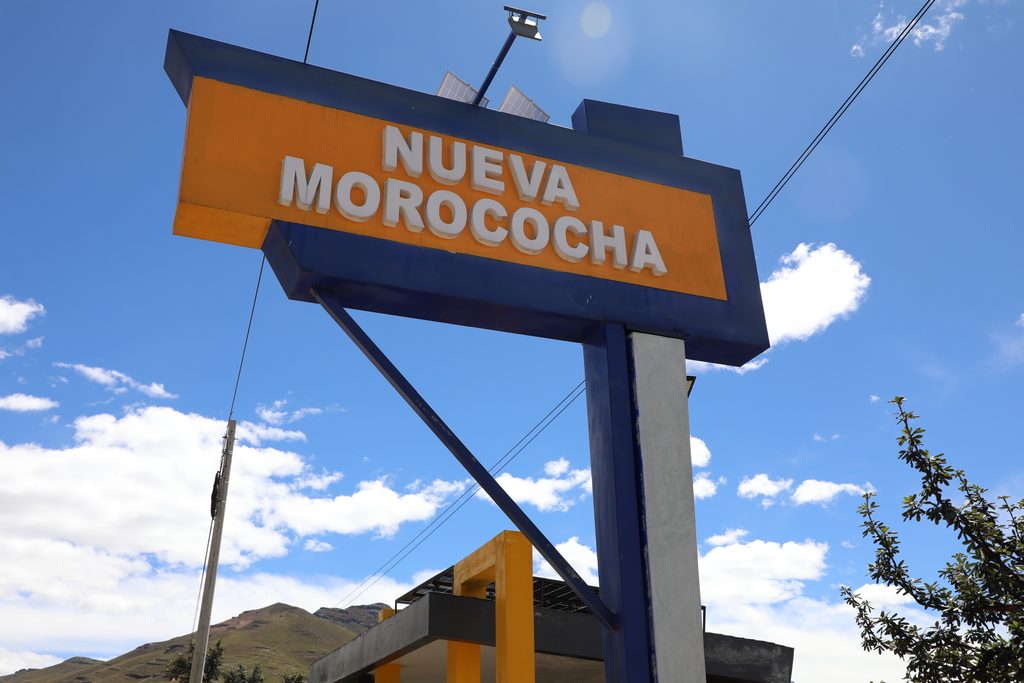
The new city was built with funding from Chinalco. Construction took place 10 kilometers from Old Morococha, precisely in the locality of Carhuacoto. A total of 1,400 homes were built, all with the same design. The silence of the new city contrasts sharply with the Morococha Elvis remembers. He is one of the few people who lives in the new city. Most of those who were resettled have chosen to move elsewhere and rent out or sell their homes.
Yolit, for her part, has decided not to live in the new city because, she says, it is more dangerous than Old Morococha. Her refusal to move is based on a series of technical reports concerning living conditions in the city built by the mining company. In December 2011, for example, the Ministry of Housing warned in a document that the site was at risk of flooding, soil liquefaction and earthquakes.
There are also reports issued by the Yauli-La Oroya Health Network in 2017. That report confirmed three cases of children between the ages of one and eight who had lead in their blood. Years earlier, in 2008, Minera Perú Copper had studied the presence of metals in the soil where New Morococha now stands. Its study found levels of lead, arsenic and other metals above the limits established in Peru.
Because of these warnings, Yolit moved to a small home in Pucará, a town located 10 minutes from New Morococha. She lives there with her partner and their four children, two of them minors. Her husband has suggested that they move to Huancayo, the capital of the Junín region, a three-hour drive away, so that their children can study there. But Yolit wants to remain close to Morococha: she cannot imagine starting from scratch far from the place where she grew up.
THE FUTURE OF THE MOROCOCHANS
After more than 13 years of conflict, on August 18 of this year, the agreement was signed in Lima between Morococha Mayor Roberto Cornelio Flores and Chinalco representatives. The meeting took place at 11:30 a.m. in the auditorium of the Ministry of Energy and Mines. Part of civil society participated as observers, according to Noe Gamarra of the Association of Owners Displaced by the Toromocho Project.
The agreement that was signed, however, is not the same one initially supported by Elvis, Yolit and other residents of Old Morococha. In other words, they say it differs from the Unified Framework Agreement presented by civil society in 2013, which they consider to have reflected the population’s real needs. That document was, in fact, discussed in various dialogue sessions.
The agreement that was eventually signed, by contrast, took shape in February of this year, during the administration of José Jerí, a former president who was close to Chinese companies. It was drafted during meetings organized by the Ministry of Energy and Mines, attended by leaders and authorities from New Morococha as well as Chinalco representatives. Yolit, Elvis and the last families who had resisted the resettlement were not included in the negotiations.
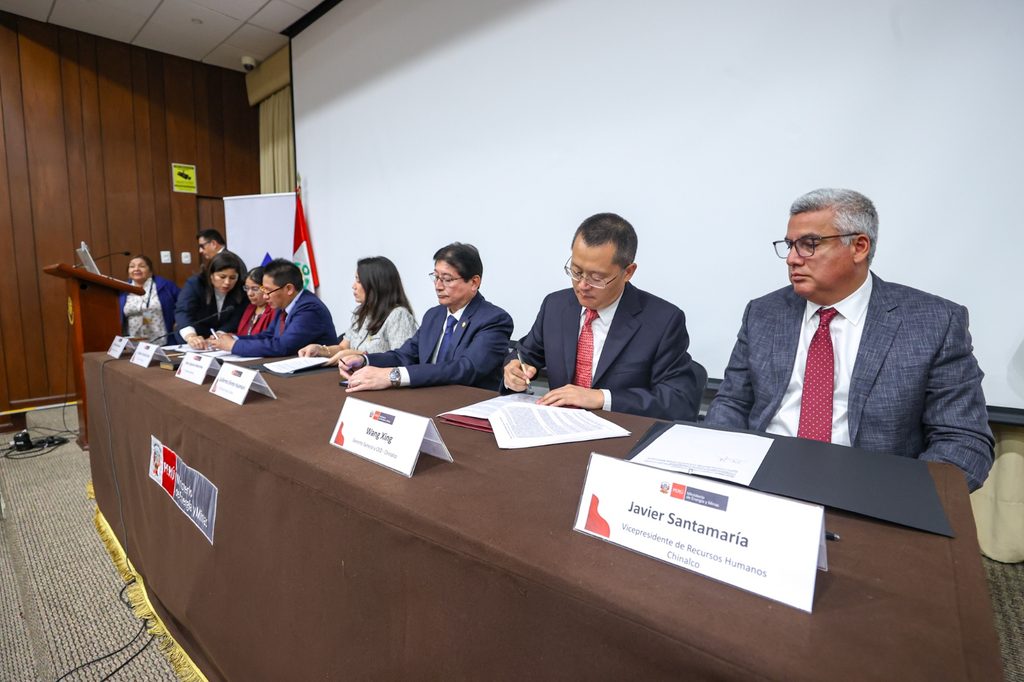
The document was put to a vote among residents on May 5, at an open town meeting organized by the Municipality of Morococha. During the meeting, both Elvis and Yolit warned that the new version of the agreement had shortcomings. Attendance at the town meeting was voluntary; nevertheless, 90 Morococha residents rejected the new agreement. Only 18 people supported signing it, including Morococha Mayor Roberto Cornelio.
On July 20, the municipality received a document signed by dozens of Morococha residents asking that what had been agreed upon at the open town meeting be respected: namely, that the agreement not be signed. Days earlier, on July 7, however, another document had arrived at City Hall, in which a sector of the population called for the decision to be reconsidered, arguing that signing the agreement would bring benefits to residents, such as access to scholarships. The Municipal Council therefore authorized the mayor to reach an agreement with Chinalco.
The signed agreement is divided into four areas: health, the economy, the environment and institutions. In the economic area, which residents consider one of the most important, Chinalco commits to promoting employment and local businesses. Families that were not resettled say these measures will benefit only families allied with the mining company.
Other employment-related commitments will fall to the Municipality of Morococha and will operate with Chinalco’s support. These include promoting a youth employment program, holding three fairs a year and providing funds for public works. Chinalco, however, will cover these expenses for only three months; if they last longer, the cost will fall on the municipality.
“We have not been resettled; we have been evicted. This agreement does not include us. We have no home, we have nothing. All we have left is to seek justice,” Elvis explains. Although the situation is complex, Elvis says they will remain united, continuing to demand dignified resettlement in a safe area with employment opportunities.
The resistance faces an additional challenge, however: alongside the loss of their homes and forced displacement, there is what they have described as judicial harassment. In addition to the mining company’s legal action seeking their eviction, the families have faced criminal proceedings for resisting authority, as well as civil proceedings through which Chinalco seeks to pay an amount lower than the value of the properties taken from them.
And this process of legal attrition has not stopped. Elvis says the company is seeking to prevent the evicted families from taking further action, even though, in his words, their right to be resettled in accordance with the law was not respected.
“This agreement does not include us. We have no home, we have nothing. All we have left is to seek justice.”
Elvis Atachagua, one of the last residents of Old Morococha
According to Red Muqui, these proceedings constitute judicial persecution and harassment of the families, causing exhaustion and impoverishment as they are forced to bear the costs of each legal case. Such lawsuits are a form of intimidation aimed at those who oppose the imposition of mining projects such as Toromocho, the civil society organization says.
Meanwhile, Chinalco continues to expand in Peru.
At the beginning of July this year, the Chinese company acquired Minera Hampton, the current owner of the Los Calatos project in the southern region of Moquegua. Chinalco paid more than $200 million for the acquisition and expects to produce 60,000 tons of copper per year for 24 years. Construction is scheduled to begin in 2027. However, the first voices of opposition to the mine from local residents have already begun to appear in local media.


